The crackling voice cuts through the static on Channel 19: “Heads up eastbound pileup at mile marker 214, right lane blocked.” For decades, moments like this defined life on the road. Long before smartphones and GPS apps, CB radios were the lifeline connecting truckers across highways, weather systems, and emergencies.
So, do truck drivers still use CB radios today? The short answer is yes, but not in the way they once did. While usage has declined significantly from the golden age of the 1970s and 1980s, CB radios have not disappeared. In 2026, they remain a niche but meaningful tool for safety, real-time road intelligence, and community.
This question matters for several reasons. CB radios play a role in highway safety, reflect trucking culture, and carry deep nostalgia for veteran drivers. For new truckers, the decision to install one can feel unclear in a world dominated by apps and fleet technology.
This article explores current usage statistics, why some truckers still rely on CB radios, why others have abandoned them, modern alternatives, and what the future holds for CB communication in trucking.
The Short Answer: Yes, But It’s Complicated
Current Usage Statistics
CB radio use has undeniably declined, but it hasn’t vanished. A 2021 industry survey found that approximately 54% of truckers still use CB radios daily, while another 10% have a CB installed but rarely turn it on. That’s a significant drop from the 1970s through the 1990s, when CB radios were nearly universal in long-haul trucking.
Today’s numbers reflect a shift rather than extinction. CB radio use has become situationally activated when conditions demand it rather than running nonstop.
Regional and Situational Variations
CB activity varies widely by route and geography. High-traffic corridors like I-80 and I-5 tend to be more active, especially near cities, ports, and mountain passes. Eastern routes generally have more chatter than western highways, where long stretches of road can be eerily quiet.
Time also plays a role. CB radios come alive during rush hours, severe weather, construction zones, and accidents. Outside of those moments, silence is common.
The Generational Divide
Veteran drivers with 20 or more years behind the wheel are far more likely to use CB radios regularly. Many newer drivers, raised on smartphones and apps, rely on digital tools instead.
Company policies also influence usage. Some fleets discourage or prohibit CB installation, favoring integrated communication and telematics systems instead.

Brief History: The Golden Age of CB Radio
The 1970s Boom
CB radios exploded in popularity during the 1970s. The 1973 oil crisis made fuel coordination critical, while the national 55 mph speed limit increased the need for “Smokey” (police) reports.
Pop culture fueled the craze. Movies like Smokey and the Bandit, songs like Convoy by C.W. McCall, and TV shows glamorized the open road. CB radio became the original social network for truckers, instant, anonymous, and alive.
Peak Popularity
At its peak, nearly every truck rolled with dual whip antennas. Channel 19 was constantly buzzing with traffic updates, jokes, warnings, and conversations. A unique slang developed, creating a shared language and identity across the industry.
The Decline Begins
The 1990s brought change. Cell phones emerged, the 55 mph limit ended in 1994, speed governors became common, and GPS navigation replaced the need for directions from strangers on the radio. CB radios slowly shifted from essential to optional.
Why Truckers Still Use CB Radios Today
Real-Time Traffic and Road Conditions
Information No App Can Provide
CB radios excel at delivering instant, hyper-local information. A driver just half a mile ahead can warn about an accident, sudden slowdown, or lane closure before any app updates.
Drivers report that CB alerts are often more precise than navigation apps, especially when it comes to which lane is blocked, how long a delay might last, or whether traffic is moving at all. In winter, CB chatter about ice, fog, or visibility can arrive minutes earlier than digital alerts.
Life-Saving Emergency Warnings
CB radios have helped prevent countless accidents. In fog-prone areas or during snowstorms, drivers use CB to warn others about stopped traffic ahead. Brake-check warnings and sudden slowdown alerts can mean the difference between a close call and a multi-vehicle pileup.
Reliability Where Cell Phones Fail
Remote Area Coverage
Unlike smartphones, CB radios do not rely on cell towers or internet connections. In rural areas, deserts, mountains, or stretches of highway with poor reception, CB radios still function reliably.
There are no data plans, subscriptions, or roaming concerns, just push-to-talk communication.
Infrastructure Independence
CB radios continue working during network outages and large-scale emergencies. Their simplicity and independence have proven valuable during disasters, making them a trusted backup when digital systems fail.
Warehouse and Loading Dock Communication
Many warehouses and distribution centers still rely on CB radios for dock assignments and yard coordination. In confined, noisy environments, CB communication can be faster and more practical than phone calls.
While some facilities have shifted to texting or apps, CB remains part of daily operations in certain locations.
The Social and Psychological Factor
Combating Loneliness
Long-haul trucking can be isolating. Casual CB conversations provide companionship, humor, and human connection during long stretches of road.
Trucker Culture and Identity
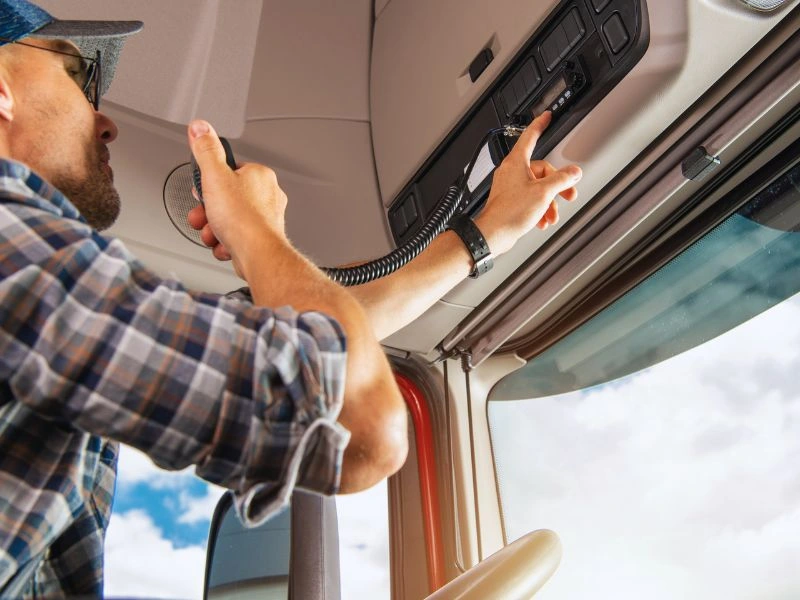
For many drivers, CB radios symbolize trucking heritage. Using one connects them to generations of drivers who relied on the same technology. For “old school” truckers, CB radio use is part of their professional identity.
Why Many Truckers Have Abandoned CB Radio
The Noise Problem
Content Quality Issues
One of the biggest complaints is poor content quality. Profanity, offensive language, and meaningless chatter often dominate channels. Illegal high-powered radios create “skip” interference, overwhelming legitimate communication.
Physical Interference
Modern trucks generate electrical noise, while cities introduce interference from power lines and traffic signals. Poor audio quality drives many drivers to turn CBs off entirely.
Smartphone Superiority for Many Functions
Navigation and Traffic
GPS apps provide accurate, turn-by-turn navigation, real-time traffic, and police alerts. For many drivers, apps are more consistent than random CB directions.
Personal Communication
Smartphones offer unlimited calling, texting, video chats, music, podcasts, and audiobooks features that CB radios simply can’t compete with.
Company Policies and Modern Fleet Management
Some companies prohibit truck modifications, including CB installations. Others rely on fleet communication systems, VHF radios, ELDs, and telematics that provide traffic and routing data directly to dispatchers.
Modern Alternatives to CB Radio
Smartphone Apps Designed for Truckers
Apps like TruckChat attempt to replicate digital CB functionality, while Trucker Path helps with parking and truck stops. Waze offers trucker-friendly routing overlays.
However, these tools require cellular data, are text-based (and often unsafe to use while driving), and lack CB’s anonymity and immediacy.
Two-Way Radio Systems
Commercial VHF/UHF radios, GMRS systems, and company fleet radios offer clearer communication but usually require licenses, coordination, or subscriptions. They work well for fleets but lack CB’s open nature.
Satellite Communication
Satellite messaging and fleet systems offer global coverage and reliability but come with significantly higher costs, making them impractical for casual use.
The Current State of CB on Channel 19
What You’ll Hear Today
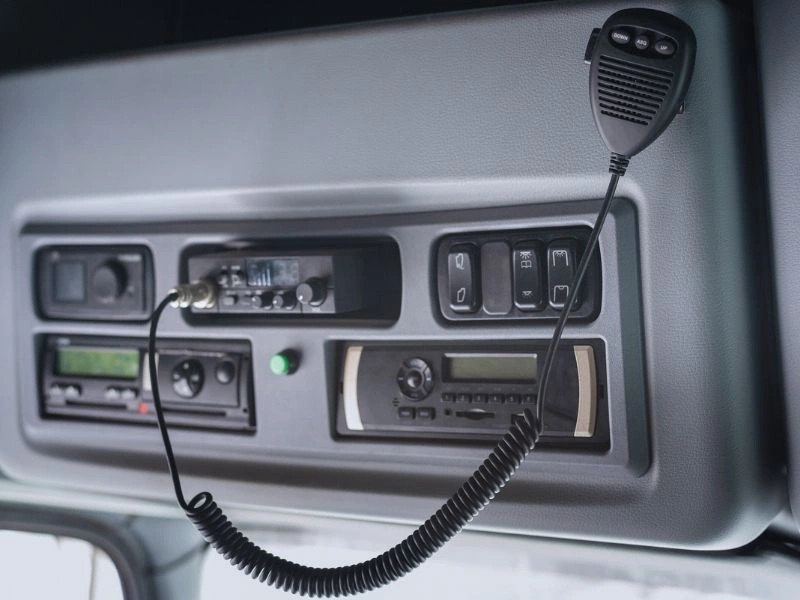
CB radios are quiet most of the time but spring to life during traffic jams, bad weather, and emergencies. Long western routes often have extended silence, while eastern highways remain more active.
When CB Is Most Active
Activity peaks near major cities, truck stops, weigh stations, and during storms. Certain states and corridors consistently see more CB use than others.
The Veteran Driver Perspective
Many experienced drivers keep CB radios off until needed. Despite the noise, they value CB as a selective tool rather than constant background chatter.
Should New Truckers Get a CB Radio?
For new truck drivers entering an industry filled with modern technology, deciding whether to install a CB radio can feel unnecessary or confusing. While CB radios are no longer the primary communication tool they once were, they still serve a purpose in certain situations.
Pros of Having a CB
A CB radio provides a valuable safety backup when technology fails. In areas with weak or no cellular service, CB radios continue to work without relying on towers or data plans. This can be critical during breakdowns, accidents, or severe weather events.
CB radios also deliver real-time local intelligence that apps can’t always match. Drivers just ahead of you can warn about sudden traffic stops, lane closures, icy bridges, or unexpected road hazards. These immediate voice alerts can prevent accidents and reduce stress.
Beyond practicality, CB radios offer a cultural connection to the trucking community. Listening in or joining conversations can help new drivers feel less isolated on long hauls and more connected to the profession’s heritage. From a cost perspective, CB radios are relatively affordable, with basic setups typically ranging from $100 to $300, making them a low-risk addition.
Cons to Consider
Despite the benefits, many new drivers find they rarely use their CB radio. On quieter routes, the radio may sit silent for hours or days. Installation requires time, proper antenna placement, and tuning, which can be frustrating for beginners.
Interference is another downside. Electrical noise, profanity, and irrelevant chatter can make CB communication unpleasant. There is also a learning curve in understanding channels, etiquette, and when to speak, which takes experience.
The Verdict
For most new truckers, a CB radio should be viewed as a backup tool rather than a primary means of communication. It can be invaluable on certain routes, during bad weather, or in emergencies, but it isn’t essential for daily driving.
Personal preference plays a major role. The good news is that you don’t have to decide immediately if you later find yourself wishing you had one; a CB radio can always be added when the need becomes clear.
The Future of CB Radio in Trucking
CB radio use will likely continue declining but not disappear entirely. It will remain a niche tool for emergencies, rural routes, and veteran drivers.
Improved noise filtering, better FCC enforcement, and integration with modern systems could extend its lifespan. CB’s simplicity, lack of fees, and independence from networks ensure it retains value.
Ultimately, CB radios endure because they work especially when nothing else does.
Conclusion
CB radios are still part of trucking, but not like the golden days. The answer to do truck drivers still use CB radios depends on region, experience, route, and personal preference.
Modern technology handles many tasks better, but CB remains valuable for real-time local warnings and emergency backup. More than a tool, CB radio represents trucking heritage and community,y something smartphones can’t fully replace.
In 2026, a CB radio is a nice-to-have, not a must-have, but for some drivers, it’s still worth its weight in gold.
FAQs
1. Are CB radios still legal for truck drivers?
Yes. CB radios are legal in the U.S. and don’t require a license.
2. What channel do truckers use most on CB radios?
Channel 19 is the most commonly used channel for highway communication.
3. Are CB radios better than trucker apps?
CB radios offer real-time voice alerts, but apps provide navigation and broader data.
4. Do new trucks come with CB radios installed?
Most modern trucks do not include CB radios by default.
5. Is a CB radio worth buying in 2026?
As a backup safety tool, yes, especially for rural routes and bad weather.